
Who Closes the Wall After an Electrician or a Plumber?
Showcase Drywall · Eagle, Colorado · 26 years in the valley
Not the electrician, and not the plumber. Both will cut into your drywall to reach what they need, and neither is responsible for putting the wall back. That gap surprises most homeowners, and it is where a lot of half-finished rooms come from.
This article explains why the opening gets left, who should close it, what a proper closure involves, and how to arrange the work so the two trades do not collide.
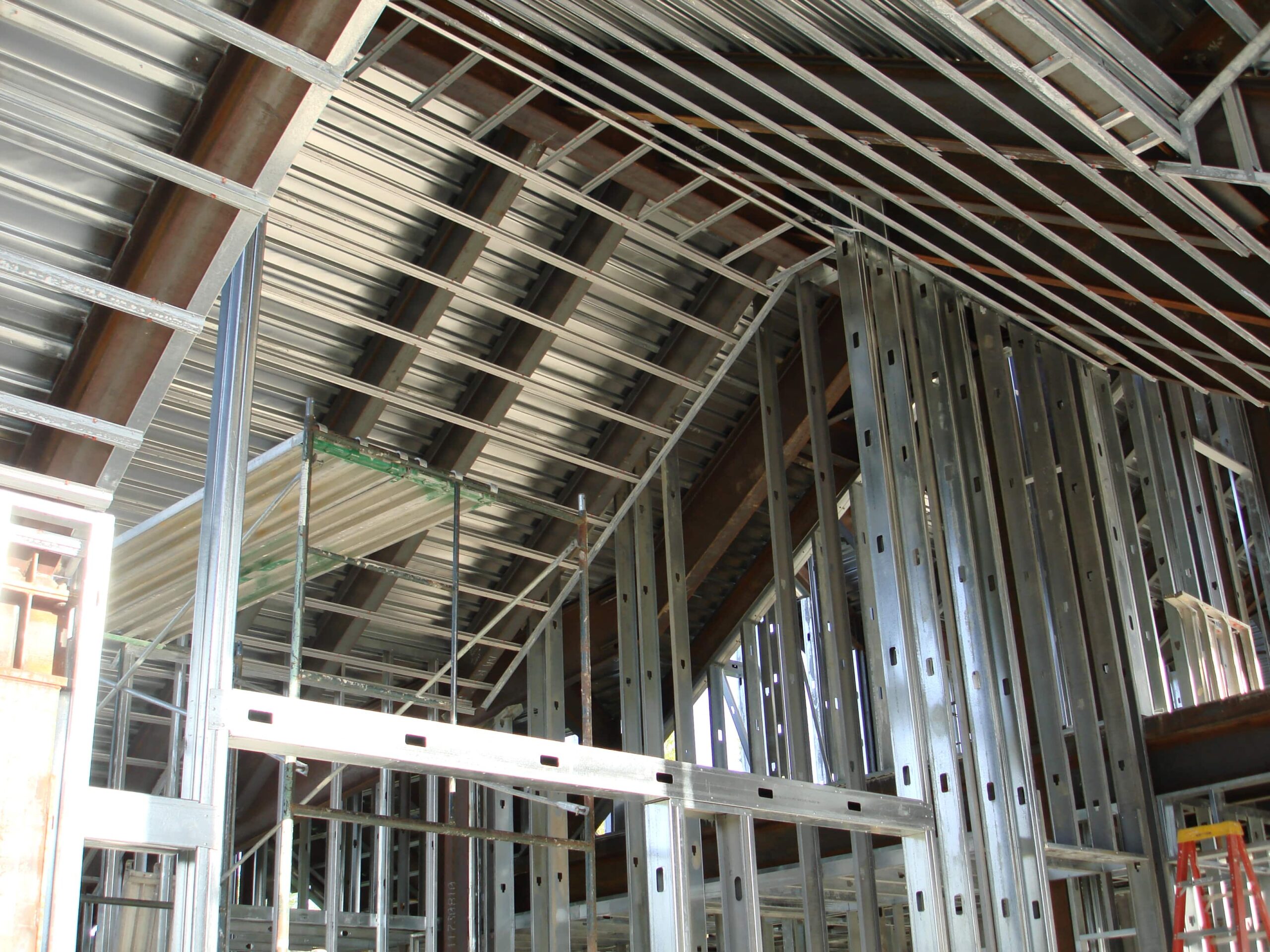
Why the trades leave the hole
It is not laziness or bad service. It is scope.
An electrician is licensed and insured to work on electrical systems. A plumber is licensed and insured to work on plumbing. Neither carries drywall finishing in their quote, and most do not carry the skill either, because hanging and finishing drywall to an invisible standard is a separate trade that takes years to learn.
Many will offer a rough patch, and some are genuinely good at it. What almost none of them will do is match a hand texture and repaint a full surface so the opening cannot be found. That is the part that makes a repair invisible, and it is the part that is outside their work.
A good trade will tell you this before they start. If your electrician says “you will want a drywall guy after this”, that is honesty, not a brush-off.
Who should close it
A drywall contractor, for anything you will see. A handyman, for anything you will not.
The distinction is worth being plain about, because not every opening needs a specialist:
A handyman or a careful homeowner is fine for: a small opening in a smooth painted wall in a utility room, a garage, a closet, or anywhere with no direct light and no texture to match.
A drywall contractor is worth it for: anything on a ceiling, anything with a texture, anything in a room with large windows, anything larger than a hand, and anything in a room you care about the look of.
The reason is not skill snobbery. It is that the visible failure modes — a texture that does not match and paint that flashes — only appear after the job is finished and the light changes. By then the cheap repair has to be cut out and done again, and you have paid twice.
What proper closure actually involves
Closing an opening in drywall is more steps than most people expect, which is why it takes two or three days rather than an afternoon.
- 1. Square the opening. Ragged edges get cut back to clean straight lines, usually to the framing either side so the new piece has something solid to fasten to.
- 2. Add backing. Where there is no framing behind an edge, backing goes in so the patch cannot flex. A patch that moves will crack along its seams within a year.
- 3. Cut and fit new board. Same thickness as the existing wall. In homes finished to a higher standard that is 5/8 inch, not 1/2 inch, and mixing the two leaves a step in the surface.
- 4. Tape the joints. Tape bedded in compound at every new seam. This is what carries movement. Filler alone cracks.
- 5. Coat and feather. Two or three coats, each wider than the last, feathered well past the repair so there is no ridge to catch the light.
- 6. Sand flat.
- 7. Match the texture. Read the existing pattern, mix to the right consistency, test it on a board, then apply and blend outward past the patch.
- 8. Paint the full surface. Wall corner to corner, or the whole ceiling. Not the patched area.
Steps 7 and 8 are the ones that get skipped in a cheap job, and they are the only two the finished result depends on.
Between most of those steps the compound has to dry. That is why nobody can do this properly in a single visit, and why a quote promising a same-day invisible repair is quoting a different job.
A real example
A home in Buckhorn Valley, Gypsum had new light fixtures and wiring installed. The electrician did what electricians do: cut what he needed to reach the runs, in an upstairs hallway, the living room and the basement family room, and left the openings.
We patched every one, finished them smooth, matched the existing texture and painted. Three days. You cannot tell where the electrician was.
The useful detail in that job is the count. One opening would have carried the full setup cost — the drive, the protection, the return visits for drying and paint. Three rooms at once spread that across the whole job, which is why the sensible move is to collect this work rather than call someone out for each hole.
How to sequence the trades
Getting the order right saves money and arguments.
- 1. Finish all the invasive work first. Electrical, plumbing, low voltage, anything that involves opening a wall. If you know the bathroom is getting new fittings in two months, do not close the hallway wall now.
- 2. Inspections before closure. Where the work needs inspection, the inspector has to see the installation before it is covered. Closing a wall before sign-off means opening it again.
- 3. Then drywall. One visit, all openings.
- 4. Then paint, if it is not part of the drywall scope. Ours is.
- 5. Flooring and trim last, where they are involved.
The common and expensive mistake is closing walls between two phases of trade work. It feels like progress and it means paying for the same repair twice.
The three ways these repairs go wrong
Almost every failed trade patch we are called in to redo failed in one of three ways.
It was filled, not taped. Somebody pushed compound into the gap around the replaced piece and sanded it smooth. It looked perfect for a few months. Then the seasons changed, the framing moved a fraction, and four straight cracks appeared in a neat rectangle. Without tape bridging those seams, the compound has nothing holding it together.
The texture was sprayed over a hand finish. A can of orange peel over a skip-trowel wall reads as a rectangle of the wrong pattern. It is often more noticeable than the hole was, because a hole reads as damage and a bad patch reads as bad work.
Only the patch was painted. This is the most common of the three and the hardest to explain to someone before it happens, because the wall looks fine while the paint is wet. New compound is more porous than old painted drywall, so it absorbs more and dries to a different sheen. In a room with a window, the patched area shows as a dull or shiny panel from certain angles for as long as the paint lasts.
The fix for all three is the same and it is not complicated: tape the seams, match the finish by testing first, and paint the whole surface. None of that is specialist knowledge. It is just time that a cheap quote does not include.
Who pays for it
Normally you do, as a separate line from the trade’s own work.
A few points worth knowing:
- Some general contractors include making good in their scope for larger jobs. Ask, and get it in writing.
- A trade that cut a larger opening than necessary, or cut in the wrong place, is a different conversation, and a reasonable firm will contribute.
- On an insurance claim, the cost of opening up a wall to reach a failure and closing it afterwards is normally part of the claim, not something separate. Your insurer decides.
- If a plumber or electrician offers to "take care of the patch", ask specifically whether that includes texture matching and painting the full surface. Usually it does not, and that is fine as long as you know.
What to ask before the work starts
Ask the electrician or plumber:
- Roughly how many openings, and how large?
- Where will they be?
- Will you need to come back, or is this the only time these walls are open?
Ask the drywall contractor:
- Will you match the texture, and will you test it first?
- Will you paint the full wall or ceiling, or just the patch?
- How many days, and how many visits?
- Will the area be protected and cleaned daily?
Four questions each, and between them you avoid nearly every bad outcome in this kind of work.
Working in a finished house
Most of this work happens in homes people are living in, which changes how it has to be run.
We tent off the work area with plastic so sanding dust stays in one room, cover floors and furniture, and clean at the end of every day rather than at the end of the job. In a rental, the work gets planned around the booking calendar. In a residence, we tell you which rooms are unusable and for how long, before we start.
In Vail, permitted construction runs between 7:00 a.m. and 7:00 p.m., Monday through Friday, so that is the window the work is planned inside. Elsewhere in the county, homeowners association quiet hours usually set the limits.
Questions we get
Can the electrician just put the piece back?
Sometimes they keep the cut-out and screw it back in. It still needs taping, coating, sanding, texture and paint to disappear, so it saves a little material and none of the finishing.
How long after the trade work should I wait?
No waiting needed, as long as the work is finished and any inspection is done. The sooner the wall is closed, the sooner the room is usable.
Is it cheaper to do all the rooms at once?
Yes, noticeably. The setup, the protection and the return visits are shared across the job rather than repeated.
What if the opening is in a ceiling?
Ceilings are harder, take longer and nearly always need the whole plane repainted. Expect a ceiling opening to cost more than the same opening in a wall.
Do you work directly with my plumber or electrician?
Yes. A good share of this work comes to us from the trades themselves, who would rather hand it to someone who finishes properly than leave their customer with a hole. We are happy to coordinate timing directly with them.
Can you do it before I move in?
That is the easiest version of this job. An empty room needs no protection and no working around anyone, and it is quicker and cheaper as a result.
The practical summary
The trades open the wall. They do not close it, and they are not supposed to. Collect all the invasive work first, make sure any inspection has happened, then bring in one drywall crew for every opening at once and have them match the texture and paint the full surface.
Showcase Drywall closes up after electricians, plumbers and other trades across Vail, Beaver Creek, Avon, Edwards, Eagle and Gypsum, and has been doing drywall work in this valley for 26 years. Call (970) 977-0247 for a free quote, back to you within 24 hours.